
Your cart

Subtotal:

$113.00

Explore Bhopal

  • Home
  • Explore-Bhopal

Bhopal

The City of Lakes and Legacy

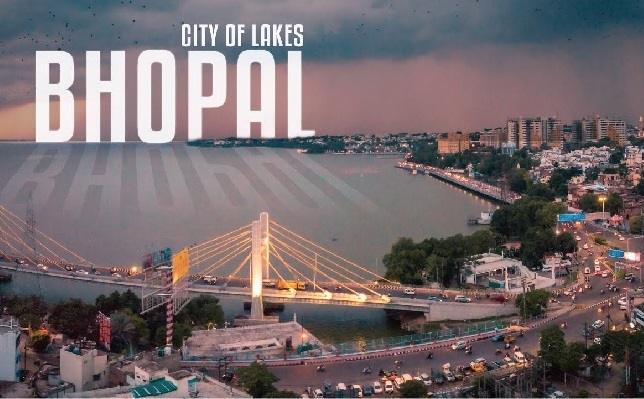
Bhopal, nestled in the heart of India, is a city where natural splendor and cultural richness go hand in hand. Famously known as the City of Lakes, its serene landscapes are matched by a deep and diverse historical legacy.

The region surrounding Bhopal has been a cradle of ancient Indian civilization, with nearby sites like Bhojpur, home to the majestic Shiva Temple built by Raja Bhoj in the 11th century — a symbol of devotion and architectural brilliance. The city’s name itself is believed to have originated from “Bhojpal,” referencing the legendary Raja Bhoj.

Temples such as Birla Mandir, Lakshmi Narayan Temple, and the spiritual atmosphere of nearby Sanchi Stupa reflects the city’s deep spiritual and philosophical heritage.

Bhopal stands as a unique tapestry of ancient values, royal legacies, and modern aspirations - Welcoming all with warmth, wisdom, and grace.


Sanchi Stupa

Sanchi Stupa

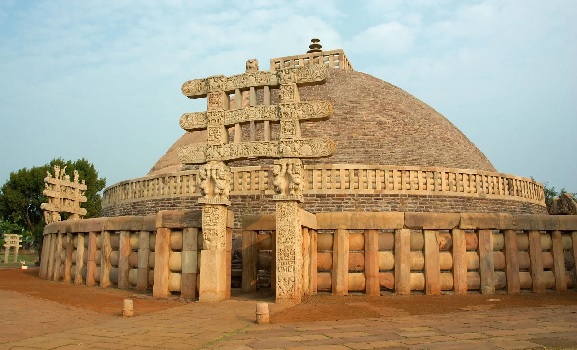
The Sanchi Stupa, a UNESCO World Heritage Site, is a prominent Buddhist complex located on a hilltop in Sanchi, Madhya Pradesh, India, renowned for its Great Stupa, a testament to Buddhist art and architecture from the 3rd century BCE to the 12th century CE. Sanchi Stupa is situated in the Raisen District of Madhya Pradesh, about 46 kilometers northeast of Bhopal. The site is a major Buddhist sanctuary, housing the Great Stupa and other monuments, including temples, viharas, and stambhas (pillars). The Great Stupa was built by Emperor Ashoka in the 3rd century BCE, and the site flourished as a center of Buddhism for several centuries.
Bhimbetka Rock Shelters

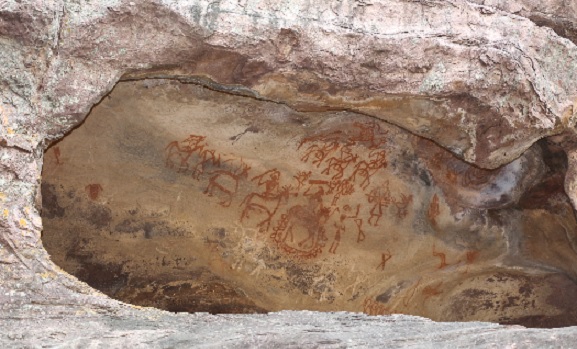
Bhimbetka Rock Shelters is one of the most fascinating archaeological and historical sites of Central India, offering a window into the prehistoric era of human civilization. Nestled amidst the Vindhya mountain ranges, this UNESCO World Heritage Site is renowned for its rock paintings that date back to over 30,000 years. These natural rock shelters not only served as homes to early humans but also bear striking evidence of the evolution of human life through the ages — from the Paleolithic and Mesolithic periods to the early historic era. The vivid wall paintings depict scenes of hunting, dancing, music, and community life, rendered in natural pigments that have stood the test of time. Surrounded by dense forests and rocky terrain, Bhimbetka is not just a treasure trove for historians and archaeologists, but also a serene and spiritual destination for nature lovers and explorers. Located just 45 kilometers from Bhopal, it is considered a “must visit” for anyone keen to explore the roots of human creativity and survival.

Bharat Bhavan
UpperLake

Upper Lake (Bhojtal)

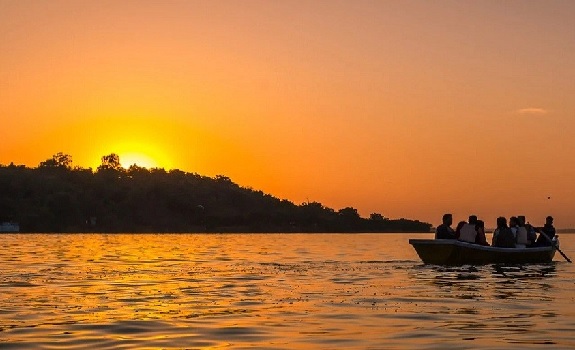
Bhojtal, also known as Upper Lake, is a large lake which lies on the western side of the capital city of Madhya Pradesh, Bhopal, India. It is a major source of drinking water for the residents of the city, serving around 40% of the residents with nearly 30 million imperial gallons (140,000 m3) of water per day. Bada talaab, along with the nearby Chhota Talaab, meaning small lake in Hindi, constitute Bhoj Wetland, which is now a Ramsar site. Since the construction of the lake in the 11th century, Bhopal city has grown around it. The people are religiously and culturally attached to the lakes. The lakes meet their needs of water supply and they wash clothes in them (very harmful for the lake ecosystem), cultivate water chestnut in Bhojtal and lotus in Chhota Talaab. The idols of gods and goddesses are also immersed in the lake during religious festivals, though the local administration is advising devotees not to do so. The Takia island in Upper lake has a tomb of the Shah Ali Shah, which has religious and archaeological significance.

Tribal Museum

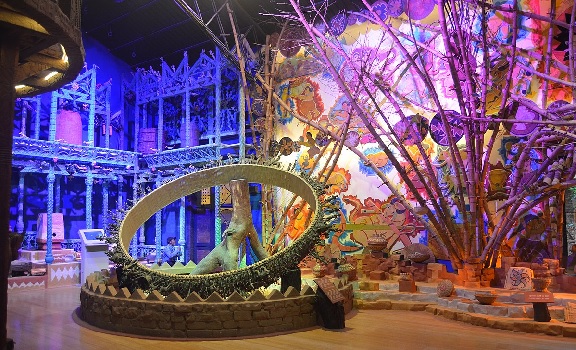
Tribal Museum, Bhopal, is one of the most unique and culturally rich museums of Central India, offering a vibrant and immersive experience into the lives, traditions, and heritage of the tribal communities of Madhya Pradesh. More than just a collection of artifacts, the museum is a living canvas that artistically showcases the imagination, mythology, rituals, and everyday life of the indigenous tribes such as Gond, Baiga, Bhil, Korku, Kol, and Sahariya. The open, interactive displays are thoughtfully designed with tribal art, life-sized installations, and multimedia elements that allow visitors to walk through traditional tribal homes, ceremonial spaces, and storytelling areas. With its colorful architecture, earthy aesthetics, and innovative curation, the museum stands as a tribute to the rich tribal legacy and cultural diversity of the region. Located in the heart of Bhopal, the Tribal Museum is a “must visit” destination for tourists seeking to explore the soul of Madhya Pradesh through its native roots and living traditions.

Bhimbetka Caves
Van Vihar National Park

Van Vihar National Park

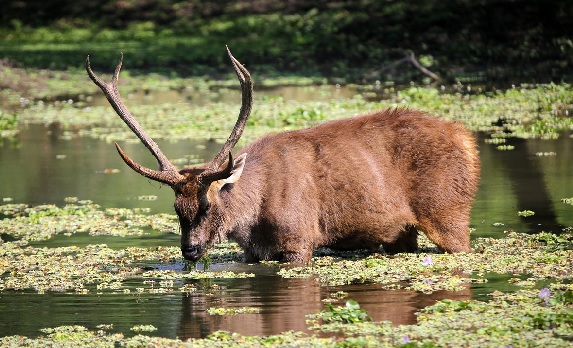
Van Vihar National Park and Zoo is one of the most revered National Park and Zoo of Central India and is a shining beacon in the field of conservation. It is an amazing world of winged creatures, free ranging ungulates and captive carnivores in the midst of greenery.The park which is more popularly known as just “Van Vihar” is considered as a “must see” destination for tourists visiting Bhopal. The characteristic combination of rich wetland areas, meadows, pools of water at different places, rugged slopes, mixed bamboo vegetation along with grass covered plateau and areas of mixed plantations support the rich floral and faunal diversity in the area.This green oasis amidst the city of lakes also plays a very vital role as a carbon sink contributing to environmental health of Bhopal. It is situated right next to the famous Upper Lake of Bhopal also known as the “Bada Talab” which is a Ramsar Site and one of the two lakes of Bhoj Wetland.

Bhojpur

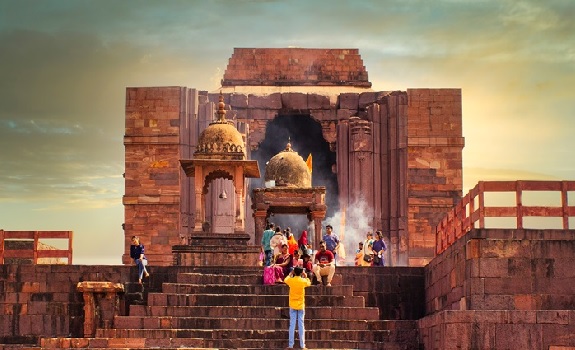
Bhojpur, a serene heritage site near Bhopal, is renowned for the awe-inspiring Bhojeshwar Temple, often called the “Somnath of the East.” This magnificent, yet unfinished 11th-century temple is dedicated to Lord Shiva and houses one of India’s largest stone lingams, standing over 7 feet tall and carved from a single rock. Commissioned by the visionary ruler Raja Bhoj, a celebrated patron of art and learning, the temple’s grand design and precise stonework reflect the brilliance of medieval Indian architecture. Though incomplete, its open sanctum, intricate carvings, and the surrounding remains of dams and quarries evoke a profound sense of history and spiritual depth. Set against a backdrop of lush hills and peaceful landscapes, Bhojpur stands as a timeless symbol of devotion, ambition, and the enduring legacy of a king whose dreams were etched in stone.

Bhojpur